India's Market Hit Its Highest Growth Momentum Yet
The numbers this year were massive. India’s electronics market crossed $120-125 billion, the highest it has ever reached. But what made this growth exciting is that it wasn’t coming from just one product. Smartphones continued to lead, yes but wearables, IoT devices, industrial hardware, EV electronics, and telecom equipment all grew together.
Exports also had a breakthrough year. India shipped electronics worth ₹2.1 lakh crore, almost 25% more than last year.
And out of this?
Smartphones alone accounted for ₹1.5 lakh crore of exports led by
Apple, Samsung, Xiaomi, and Oppo.
That’s how India became the second-largest smartphone manufacturer in the world, right behind China.
Another big shift happened quietly: India started adding more value inside the country.
Domestic value addition went up to 20%, and in wearables it touched 35-40% driven by leaders like
boAt, Noise, Fire-Boltt, and Samsung.
More PCBs, more batteries, more enclosures, fewer imports. For the first time, India wasn’t just assembling devices.
It was building real components inside the country.
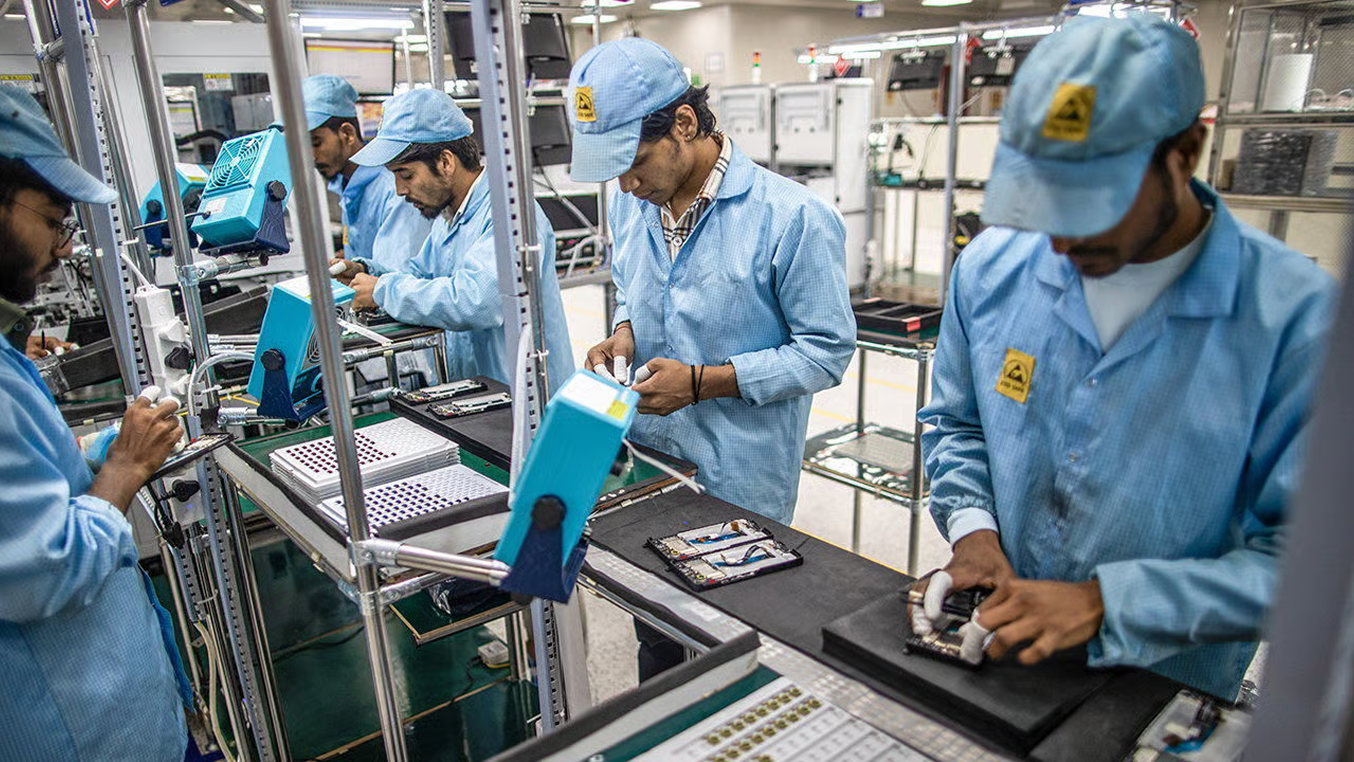
Reforms That Reshaped the Industry
2025’s growth had a strong push from policy. And this time, reforms didn’t just support the ecosystem, they removed long-standing barriers.
PLI 2.0 encouraged deeper component manufacturing, pushing camera modules, multilayer PCBs, power electronics and RF components into local production. Component output grew
30-35%, giving Indian suppliers more room to thrive.
EMC 3.0 added
90+ new manufacturing clusters across India including
Noida, Bhiwadi, Hosur, Hyderabad, Coimbatore, and Pune. These clusters gave brands and EMS companies better infrastructure, stable electricity, and smoother logistics.
Import policies were tightened too, discouraging the easy entry of fully built finished goods and prompting brands to produce locally. And then came one of the most appreciated changes:
Green channel customs. Clearance times dropped by nearly
30%, saving hardware teams days of delay.
Together, these reforms made India more predictable, more efficient, and far more attractive for global manufacturers looking for a reliable alternative to China.
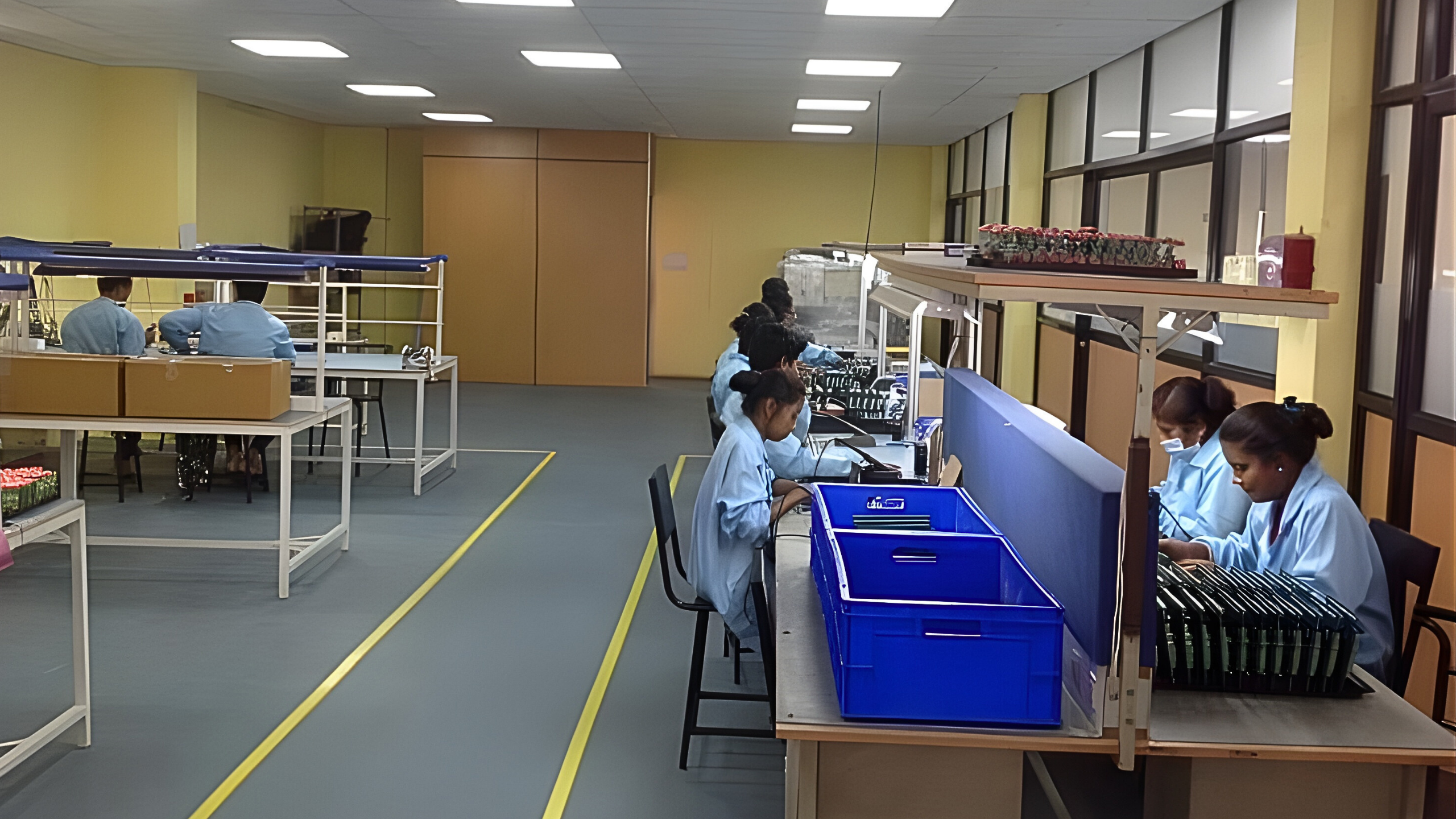
Production Accelerated Across Categories
If 2024 was about building capacity, 2025 was about using that capacity to its fullest.
Smartphone production crossed 350 million units. Almost 40% of them were exported. PCBA capabilities expanded by 28%, with
250+ new SMT lines going live across
Noida, Chennai, and Bengaluru.
EMS and ODM companies didn’t just grow, they accelerated. Production volumes were nearly 35% higher than the previous year. And this wasn’t only consumer goods. Telecom equipment, EV electronics, IoT devices and industrial controllers all contributed.
Wearables remained India’s star performer. Production grew by 45%, making India one of the world’s leading hubs for smartwatches and audio wearables.
On top of this, India announced 40-50 new component plants, adding depth to categories like connectors, magnetics, power modules, RF parts and multilayer PCBs.
This shift is crucial. Manufacturing grows only when components grow.
Breakout Categories Defined the Year
Several categories moved from emerging to explosive in 2025. EV electronics, driven by BMS requirements, thermal sensing, telematics, and motor controllers, expanded by almost 45%. Telecom infrastructure, fueled by rapid 5G deployment, added nearly $5-6 billion worth of hardware demand. Industrial electronics continued to strengthen, riding India’s automation wave with growth rates of 13–15%.
The computing ecosystem also evolved. Laptop and tablet manufacturing saw renewed momentum due to revised PLI incentives. AI-driven devices, especially edge computing hardware, became one of the most promising segments of the year. Demand grew by 50%, reflecting a future where the boundary between hardware and intelligence continues to soften.
IoT controllers and sensors also saw robust demand, expanding by nearly 25–28% as India’s smart cities, factories, and infrastructure programs scaled up.
India’s Global Position Became Impossible to Ignore
More than 40 new component plants either went live or started construction. The demand for hardware talent shot up, almost 3 lakh roles need to be filled across design, embedded, manufacturing, and supply chain.
More than half of large OEMs switched to digital BoM and sourcing tools, bringing higher transparency and sharply reducing sourcing risks.
The biggest milestone?
India entered the Top 5, standing next to
China, Vietnam, South Korea, and the US.
With China+1 momentum picking up, 30-40% of shifting global orders in wearables, PCBA, chargers, tablets, and telecom hardware moved toward India.
Global R&D investment followed the same path. Companies increased India-led R&D spending by 20-25%, showing trust not just in India’s factories but in India’s engineers.
2025 Was Not Just Growth - It Was a Shift
India didn’t just scale output in 2025, it rewrote its position in the global electronics map. Over 40 new component plants came online, talent demand surged across engineering roles, and more than half of major OEMs shifted to digital BoM tools. India broke into the
Top 5 electronics manufacturing nations, captured a rising share of China+1 demand, and saw global players boost India-led R&D investment by 20-25%.
For the first time, India wasn’t just a production hub, it became a credible centre for design, components, and global supply-chain leadership.


 QUALITY & CONSISTENCY Quality standards Reliable methods to keep our quality consistent.INSIGHTS Blog Deep dive into market-moving trends