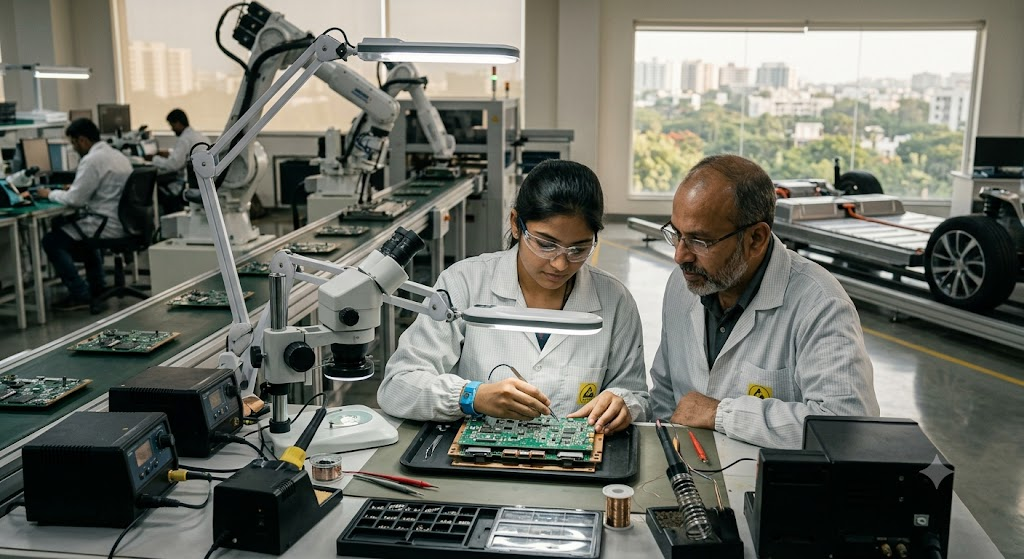
India’s transition towards electric vehicles is no longer science fiction. This shift is happening at an industrial level in production, supply chain, and technology. It presents both opportunities and risks to hardware companies, EV manufacturers, suppliers, and electronics product manufacturers.
The rapid electric vehicle adoption in India is changing the way products are developed, sourced, tested, and manufactured. Electric vehicles are not only cars equipped with batteries but are very sophisticated electronic systems dependent on battery management systems, motor control systems, software, sensors, communication, and power electronics.
As demand increases, there is a need for readiness in terms of rapid product development cycles, resilience in the supply chain, and manufacturing capabilities.
Understanding the Growth of the EV Market in India
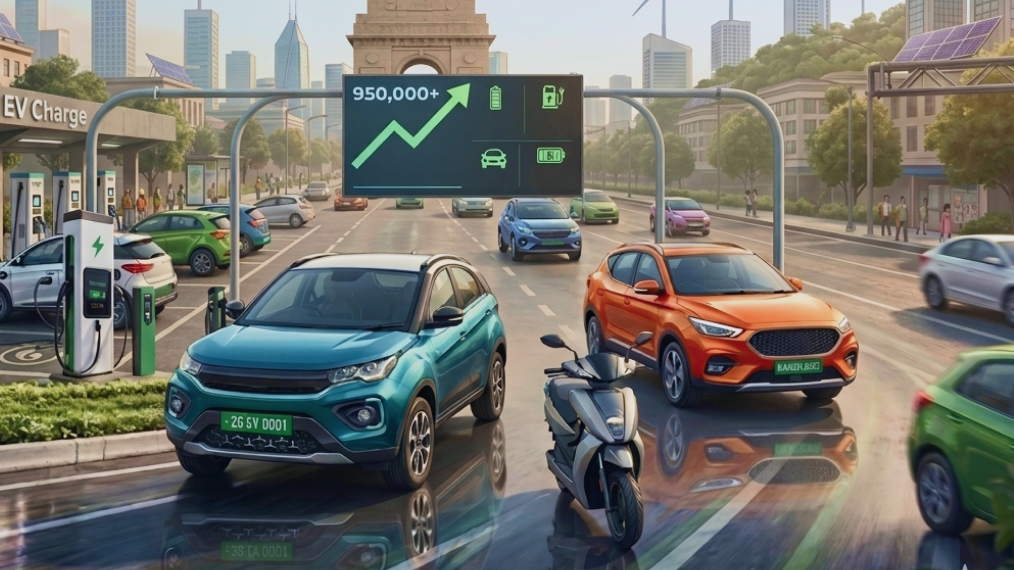
The EV market India has entered a new growth phase. According to industry statistics, there were about 8.5 percent EVs in FY 2025-26, where the highest contribution came from electric two-wheelers. Furthermore, passenger EVs are performing well on a year-on-year basis.
There are several market signs that lead to further expansion. Industry projections show that the Indian EV market is set to increase exponentially over the next decade with government incentives, private investments, and increasing customer demand.
This translates into increased demand for PCBs, batteries, chargers, power modules, embedded solutions, and manufacturing capabilities among hardware players.
Key Drivers Behind Electric Vehicle Adoption in India
1. Government Support and Policy Measures
Government policies continue to play an important role in developing the electric vehicle industry India. The programs in localization, battery manufacturing, production-linked reward, and charging infrastructure development have attracted investments in EV technologies from both startups and established manufacturers.
Policy assistance has also promoted domestic manufacturing of crucial components, reduced import dependence, and improved the wider Indian EV industry ecosystem.
2. Falling Battery Costs
Battery technology improvements are making EVs more affordable every year. As battery costs decline and energy density improves, manufacturers can offer better range without significantly increasing vehicle prices.
Lower battery costs also create opportunities for electronics suppliers involved in battery management systems, thermal management electronics, power conversion, and control systems.
3. Expansion of Charging Networks
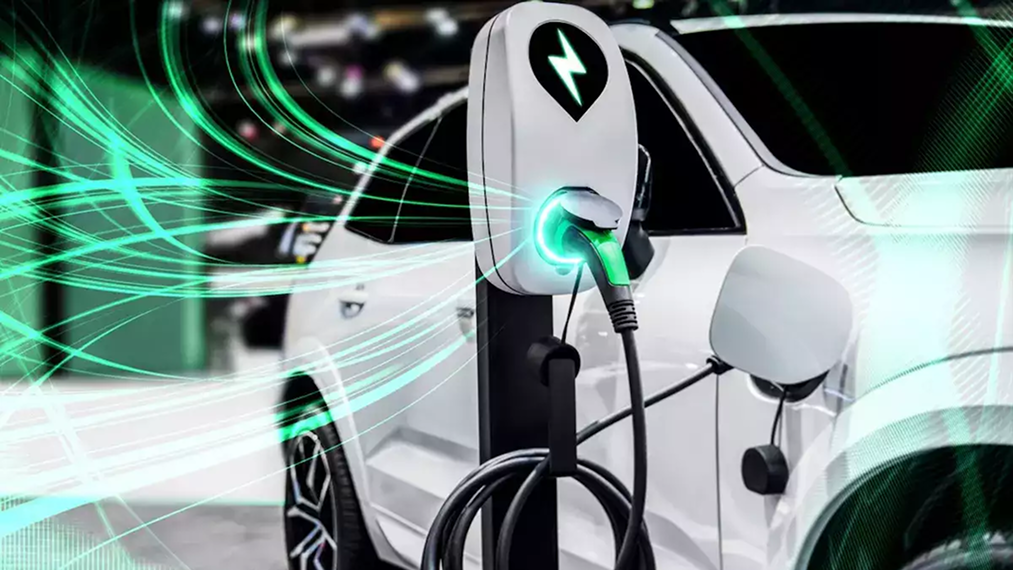
The growth of EV charging infrastructure India is one of the accelerators of adoption. Public charging stations, corporate charging solutions, and residential charging systems are expanding across major cities and roads.
The latest figures reveal a growing trend in the amount of electricity consumed at public charging stations, signaling the expanding use of EVs across the country. This creates a demand for charging controllers, communication modules, power electronics, smart meters, and connected monitoring systems for hardware manufacturers.
4. Growing Consumer Awareness
Consumers are more and more conscious of long-term savings and environmental benefits. Sustainable transportation is no longer just for the early adopters.
The use of EVs by ride-sharing fleets, logistics companies, and last-mile delivery companies is growing due to lower operating costs and sustainability requirements. This trend continues to support the overall electric vehicle market growth across diverse categories.
Industry Impact: What It Means for Hardware Enterprises
The EV revolution is creating new demands throughout the electronics industry.
Electronics manufacturers are now being asked to provide robust electronic systems capable of surviving challenging working environments and still meeting safety and performance requirements.
This change raises demand for:
- Advanced PCB assembly for power electronics
- Battery Management Systems (BMS)
- Embedded software development
- Motor control electronics
- IoT connectivity modules
- High-voltage testing and validation
- DFMA-driven product optimization
While at it, supply chain understanding has become even more significant as well. The problem of component shortages, lengthy lead times, and procurement challenges may cause delays in releasing products as well as higher costs. Sourcing strategically and optimizing BOM is becoming a vital competitive advantage.
Challenges Slowing EV Growth
The EV business still faces various challenges, despite positive momentum.
Charging accessibility is highly variable among regions. While there has been a lot of investment in major cities, many smaller markets need better infrastructure support.
Cost remains another challenge. Despite decreasing prices, EVs still tend to be more expensive upfront compared to traditional cars. The manufacturers have started to come up with new ways of doing business, like battery leasing and subscriptions.
Another issue is supply chain vulnerability. Sensitive materials, batteries, semiconductors, and specific electronics components may pose some risk when it comes to sourcing. With the growth of the electric vehicle industry India, domestic production capacity will gain importance.
Future of EVs in India: What Businesses Should Expect
The future of EVs in India will be shaped by technology innovation, manufacturing scale, and ecosystem collaboration.
As vehicle numbers rapidly rise and new energy storage applications become viable, battery demand is anticipated to surge in the next few years. According to industry estimates, India's demand for EVs could grow by almost 10 times by 2032 due to the rise in demand for EV batteries.
Businesses should prepare for:
- Increased localization requirements
- Higher demand for electronics manufacturing
- Greater focus on product reliability and compliance
- Expansion of charging infrastructure solutions
- Growth in connected vehicle technologies
The companies that build scalable engineering and manufacturing capabilities today will be better positioned to capture future opportunities.
How Elecbits Helps EV Companies Scale from Design to Production
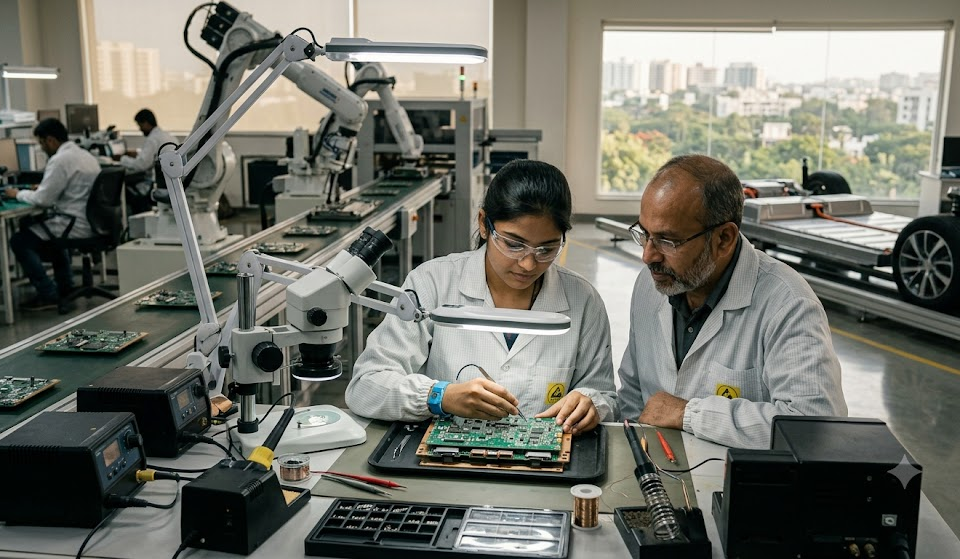
As EVs get more sophisticated, companies need more than manufacturing support - they need visibility into engineering, sourcing, and production. Elecbits offers end-to-end electronics development services including PCB design, embedded systems development, prototyping, PCB assembly, DFMA, component procurement, and turnkey manufacturing.
Elecbits has also developed Elecbits XOR, a platform driven by AI technology that allows procurement teams to measure BOM risk, evaluate component availability, monitor lead time, and identify alternate components. This process helps save effort.
By integrating engineering expertise with logistics and procurement analysis, Elecbits assists electric vehicle manufacturers such as Ola Electric and Maruti Suzuki, and other hardware businesses in accelerating their development process, making procurement choices wisely, and achieving large-scale manufacturing.
Conclusion
Electric vehicle adoption in India is spiking. Sustained demand, growth in charging infrastructure, falling battery costs, and positive government legislation are setting the stage for success in the future. The hardware companies, product firms, and supply chain leaders will have a crucial part to play in enabling the next phase of innovation in the EV market India as it continues evolving. Firms that take a proactive approach to building strong engineering processes, weathering supply chain risks, and building scalable manufacturing will be best equipped to benefit from the future of EVs in India.


 Resources Quality standards Reliable methods to keep our quality consistent. Blog Deep dive into market-moving trends.