Why Fintech Hardware Products Fail at Scale, and How to Prevent It
A fintech company designs a great POS device. It operates seamlessly in the demo; the investors are impressed, and the first 500 units are shipped successfully. As soon as they receive an order of 50,000 units, however, problems begin: the parts become unavailable, the board doesn't pass the compliance tests, and the schedule becomes increasingly difficult to meet. The product didn't fail because the idea was bad. It failed because nobody planned to scale.
This pattern repeats itself across financial hardware, whether it is card readers, biometric ATMs, smart POS systems, or IoT payment devices. Most fintech hardware companies fall short in the gap between a working prototype and a scalable, secure, mass-produced product. The difference between the ones that make it and the ones that don't often comes down to one decision: bringing in the right electronics manufacturing services partner early enough.
The Real Problem: Fintech Hardware Isn't Just Hardware
Fintech devices carry a burden most consumer electronics do not bear. They handle money, personal data, and regulatory compliance, all in an enclosure that has to last years of regular handling. A defective smart speaker is bothersome; a malfunctioning payment terminal could mean a failed transaction, a data breach, or a compliance violation.
That's why the product development for fintech companies is very different from designing a conventional gadget. Every design decision, from the choice of microcontroller to the enclosure material, must consider security certifications, encrypted data pathways, and long-term firmware support. A lab-bench working prototype generally ignores these realities, and therefore it falls apart when volume manufacturing begins.
Where Fintech Product Development Actually Breaks Down
In fintech product development, most failures trace back to some recurring gaps between prototype and production.
1. Sourcing That Can't Scale
Many teams design around chips that were easiest to source for the first 100 units. At scale, those parts may sit on 20-week lead times or head toward end-of-life. One missing component can stall an entire run.
2. Hard-To-Manufacture Designs
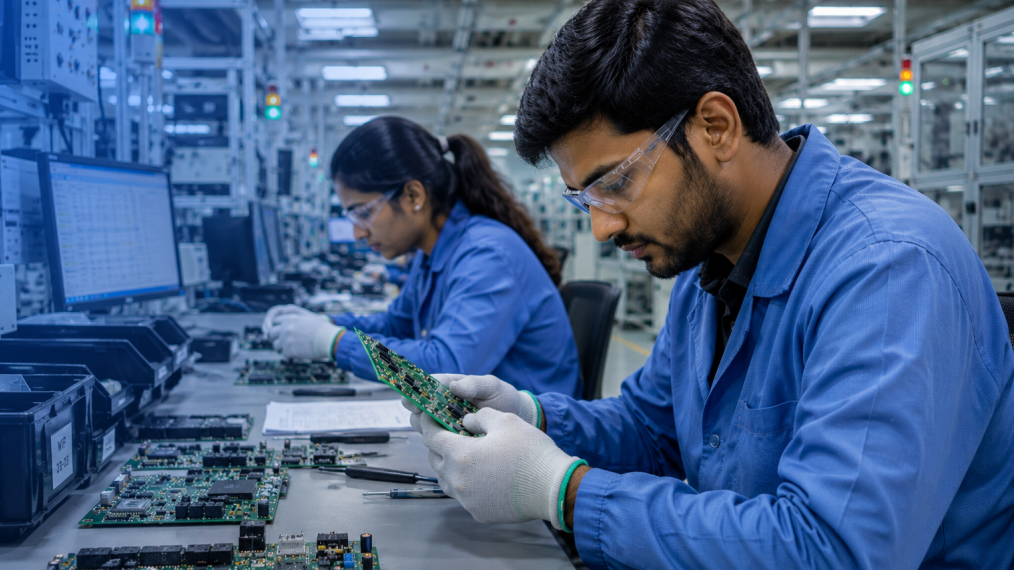
A board layout that passes prototype testing might still have spacing issues or steps only skilled technicians can execute by hand. That's fine for 50 units; it's a nightmare for 50,000. BOM optimization and DFMA (Design for Manufacturing and Assembly) reviews catch these issues before they become bottlenecks.
3. Security Bolted On Instead Of Built In
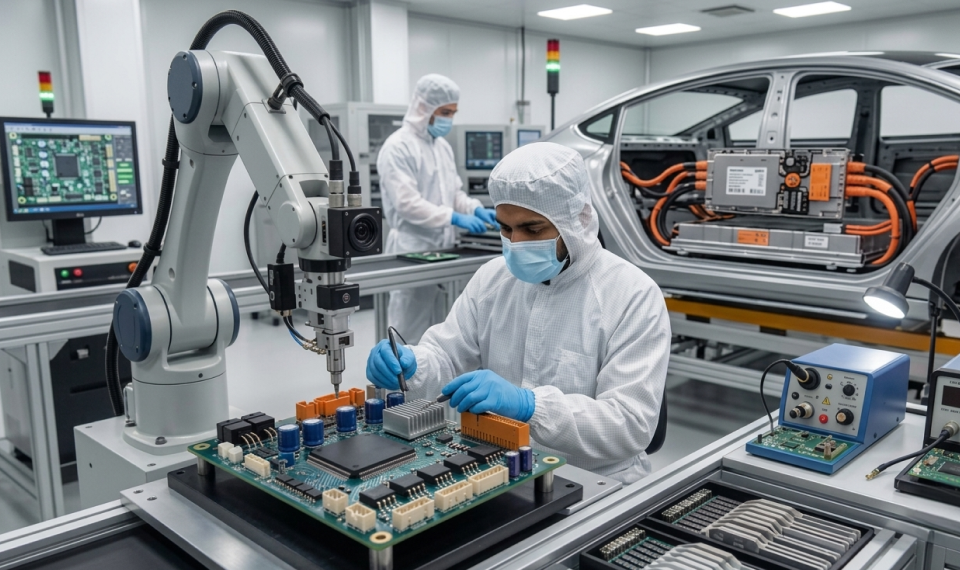
Fintech products require secure elements, encrypted storage, and tamper-evident housings. Treating security as a late software patch usually means reworking the PCB, adding cost and delay. Secure electronics production has to be part of the design conversation on day one, not after the board is routed.
4. Testing Gaps That Surface Only After Shipping
A prototype might pass basic functional tests, but production units need environmental, EMI/EMC, and stress testing across thousands of units to catch defects that only show up statistically. Skipping this means discovering failure rates after the product is already in customers' hands.
5. No Visibility Once Production Starts
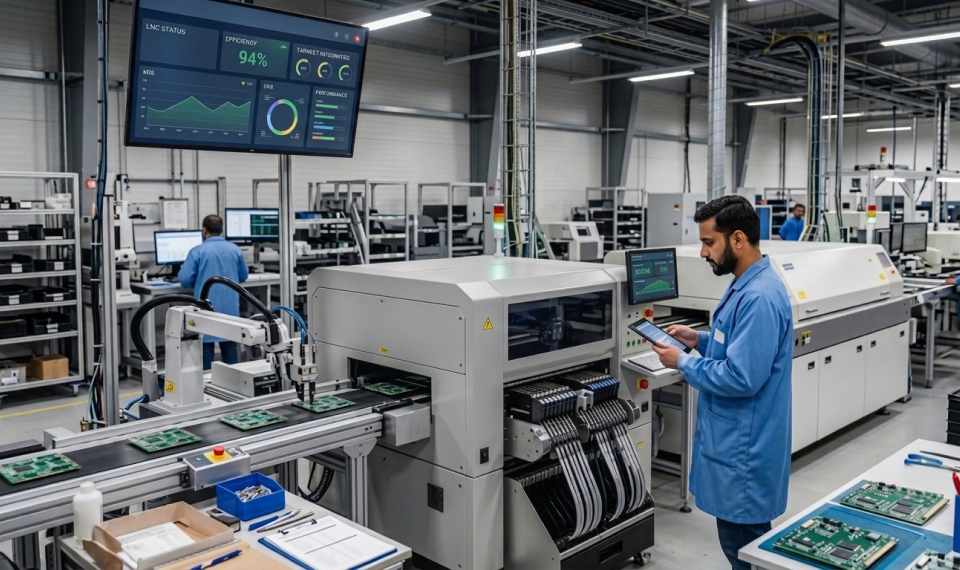
Once a company hands off manufacturing, many lose insight into where boards are in the process. Without supply chain visibility, problems get caught late, when they're expensive to fix.
How Electronics Manufacturing Services Companies Prevent These Failures
Experienced electronics manufacturing services companies should be an extension of the product team - spotting problems before they touch the factory floor, not merely putting boards together after the fact. Here's how a reliable partner can help:
1. DFM Reviews Before Tooling Begins
A good partner checks the design early and flags issues like tight trace spacing or risky assembly steps. Catching a problem on screen takes minutes to fix. Catching it after tooling is already cut can cost weeks.
2. Smarter Sourcing and BOM Management
Instead of locking a design around parts that are hard to find at scale, an experienced partner suggests easier-to-source alternates and helps build a BOM that won't need last-minute changes. This kind of planning is a core part of fintech product development, not something to figure out after the design is finalized.
3. Built-In Security and Compliance Expertise
Security and compliance can't be an afterthought in electronics manufacturing for financial products. That means keeping design files access-controlled, handling production data securely, and working with a team that already understands certifications like PCI and EMV.
4. Rigorous Testing and Real-Time Visibility
A strong partner runs functional, environmental, and burn-in tests at every stage of assembly, and gives teams a live view of where things stand, from sourcing to shipping. This kind of visibility is what separates dependable electronics manufacturing services companies from ones that simply take orders and go quiet.
Why Fintech Hardware Teams Choose Elecbits to Scale Manufacturing
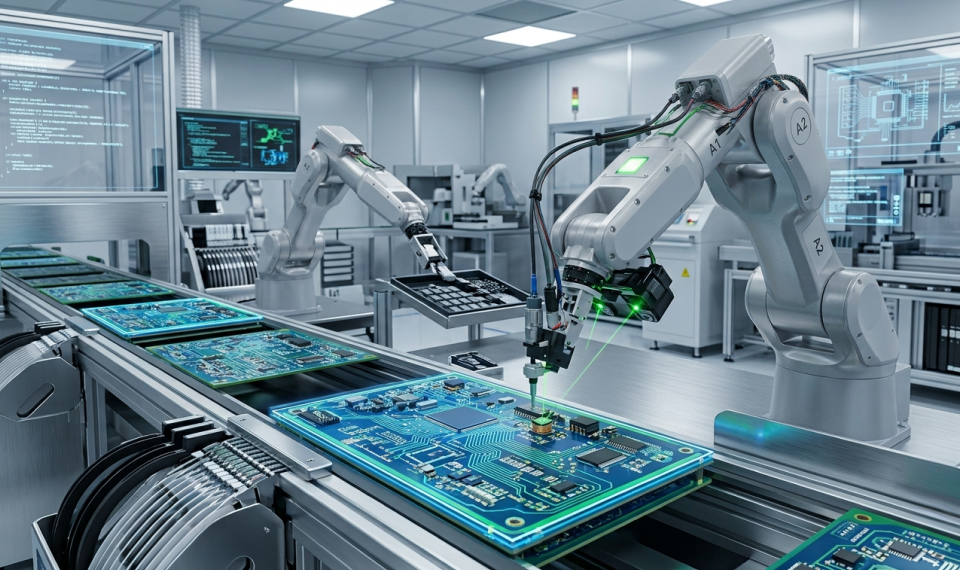
The best electronics manufacturing services companies act less like vendors and more like technical partners, and that's the model Elecbits was built on. Our AI-powered platform, Elecbits XOR, closes the gap between prototype and production: when fintech teams upload their BOM or Gerber files, our AI-powered engine runs instant DFM analysis, flags manufacturability risks, and generates production-ready quotes in minutes instead of days.
We work with a vetted pool of 800+ global suppliers, screened for on-time delivery and quality, so sourcing decisions aren't a gamble. Every order moves through our quality standards, with real-time tracking from project creation to delivery.
Because fintech hardware handles sensitive data by nature, secure electronics manufacturing sits at the center of how we operate, with encryption and controlled access built into every stage. Clients like Panasonic, Siemens, and Schneider rely on us for this kind of end-to-end support, from sourcing to full-stack assembly, meaning fewer redesign cycles and a shorter path to scale.
Summary
Scaling a fintech hardware product isn't about building a better prototype. It's about designing with production, security, and supply chain realities in mind from the first sketch. The companies that get this right treat their electronics manufacturing services partner as a collaborator from the earliest design stage, not a vendor who shows up at the end.
As fintech hardware grows more complex, with embedded systems and secure elements packed into smaller devices, the margin for manufacturing error keeps shrinking. The lesson is simple: fintech product development doesn't end at the prototype stage, and partnering early isn't just smart. It's becoming the only way to scale without breaking something along the way.


 Resources Quality standards Reliable methods to keep our quality consistent. Blog Deep dive into market-moving trends.