A payment terminal looks simple from the outside. A screen, card slot, keypad. That’s about it.
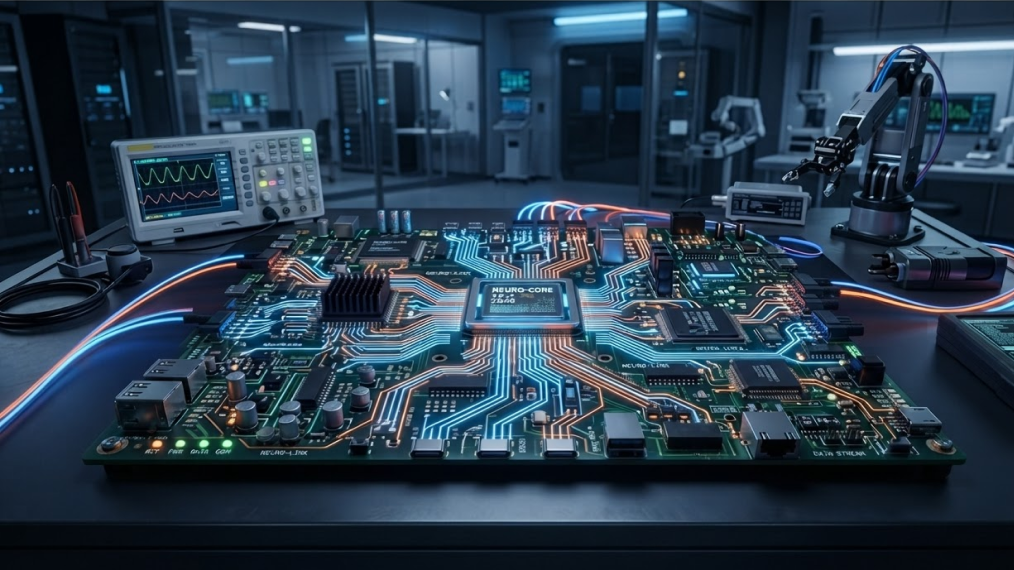
Inside, though, there’s a lot happening. Processors, secure elements, communication modules, power circuits, sensors, connectors - all packed into a small space.
And when one tiny connection fails, the problem can become surprisingly expensive. A transaction gets declined. A merchant gets frustrated. A device needs field replacement. Suddenly, a small PCB issue is a business issue.
That’s why reliability has to be considered throughout PCB manufacturing and assembly, not just checked at the end.
Why Fintech Hardware Has Little Room for Failure
Fintech devices usually have demanding operating conditions. A payment terminal may run for hours every day, get handled constantly, deal with heat and dust, and sometimes work with unstable power.
Then there’s security. These devices handle sensitive transaction data, so “it usually works” isn’t really good enough.
A weak solder joint might pass a quick test and fail months later because of vibration or temperature changes. A substituted component can create another headache.
This is where DFMA, or design for manufacturability and assembly, helps. The PCB needs to be designed not only to function, but also to be built, inspected, tested, and scaled without unnecessary manufacturing risk.
What Reliable PCB Manufacturing and Assembly Involves
Reliability starts before the first board reaches production. A few things make a noticeable difference:
- Controlled PCB fabrication: Stackup, copper thickness, impedance, drillings, surface finish, and solder mask should conform to the design. Slight discrepancies could make a difference, particularly in the case of fin-tech hardware.
- A carefully managed BOM: BOM optimization does not just consist of selecting the cheapest part. Availability, approved substitutions, lifecycle considerations, lead times, and counterfeits should also be considered.
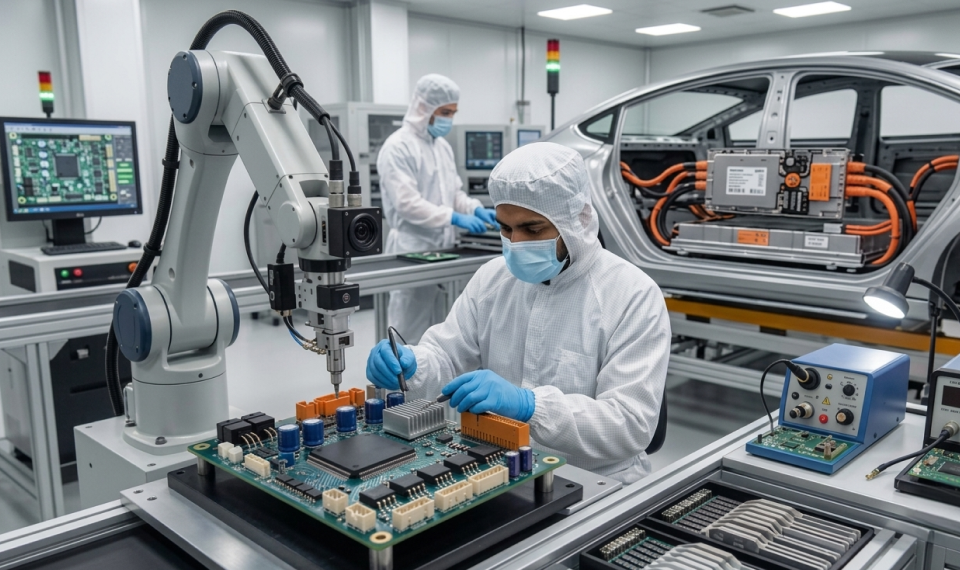
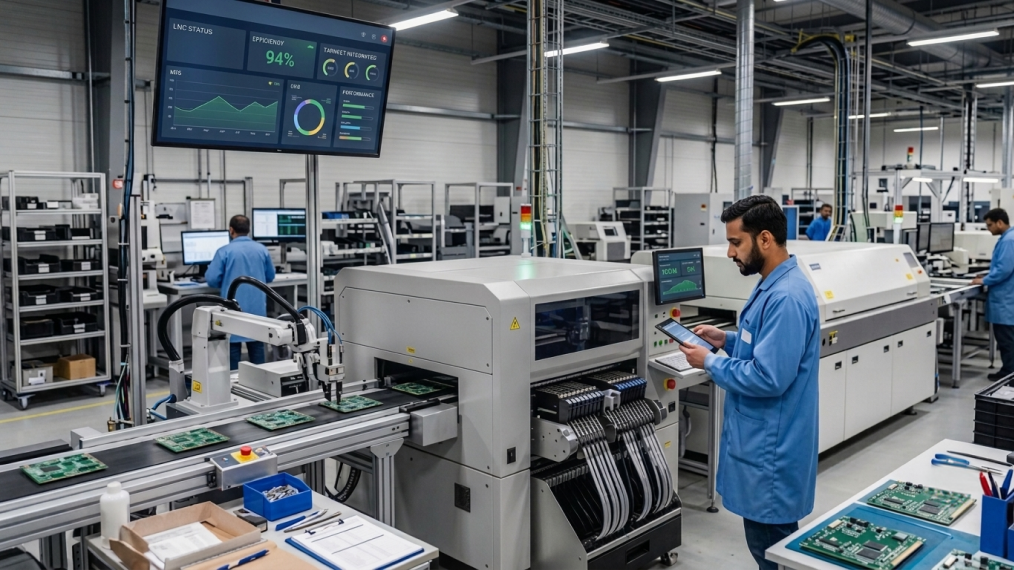
- Repeatable assembly: PCB assembly services India can include automated placement, solder paste printing, reflow, inspection, and testing. The process needs to stay within defined limits, especially around fine-pitch components.
- Production traceability: Component batches, inspection records, and test results make it much easier to investigate failures. Without that history, finding the source of a field problem can turn into guesswork.
For larger programs, PCB manufacturing and assembly should be treated as one connected workflow. BOM revisions, design files, sourcing decisions, and test requirements all need to stay aligned. Otherwise, things get messy quickly.
Where Automated PCB Assembly Helps
Manual assembly has its place, especially for prototypes and very small runs. But as production grows, consistency becomes harder to maintain by hand.
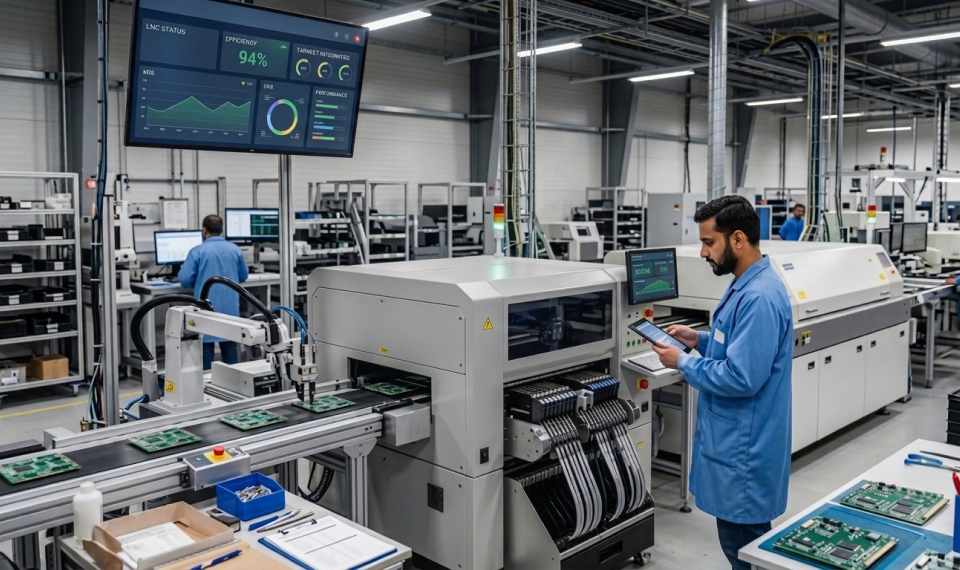
Automated PCB assembly brings repeatability to component placement and other repetitive steps. AOI and solder paste inspection can then catch placement and soldering issues before boards move further through production.
That doesn’t mean people disappear from the process. Engineers still set process parameters, review defects, investigate failures, and deal with exceptions.
Automation simply removes some avoidable variation. For an enterprise, that matters. You want the 10,000th board to behave like the 100th one.
Testing Needs to go Beyond “The Board Powers On”
A fintech PCBA needs more than a basic power-on check.
ICT and flying-probe testing can identify opens, shorts, and certain component issues. AOI can detect placement and solder defects, while X-ray inspection can help examine hidden solder joints and difficult package types.
Then comes functional testing.
The board should be tested under conditions that resemble the actual product. For a payment terminal, that could include power behavior, communication interfaces, secure elements, card-reader functions, charging circuits, and other product-specific features.
An environmental test is an additional factor. Thermal cycling, humidity, vibration, burn-in, and multiple power cycles could reveal any weaknesses that a fast electrical test could overlook.
This is where electronic component assembly and testing come into play. It is not enough to have a PCB pass certain criteria; it is crucial to detect potential issues that could arise in the future.
A Few Practical Ways to Prevent Failures
There isn’t one magic reliability test. Usually, reliability comes from several sensible practices working together.
- Control engineering revisions: BOMs, Gerbers, pick-and-place files, assembly drawings, and test specifications should have clear revision control. An outdated file should never quietly reach production.
- Qualify the supply chain: Approved vendors, incoming inspection, component authentication, and lifecycle monitoring can reduce sourcing-related failures.
- Run DFMA reviews early: Check component spacing, thermal constraints, test access, and assembly risks before volume production begins.
- Track defect patterns: If the same solder defect appears repeatedly around one component, it may point to a process issue rather than bad luck.
- Build traceability into production: Serial numbers, component lots, inspection data, and test records make root-cause analysis much faster.
- Test the real use case: A PCB can pass basic electrical checks and still struggle with heat, vibration, connectivity, or repeated power cycles in the field.
When comparing electronics assembly services, ask how these controls are actually managed, not simply whether testing is available.
How Elecbits Helps Teams Build More Reliable Fintech Hardware
As fintech hardware moves from prototype to production, teams have to manage much more than PCB assembly. Component availability, pricing, sourcing risks, design changes, manufacturing constraints, and testing all need to stay aligned.
That’s where Elecbits comes in. Elecbits is a full-stack electronics design and manufacturing company, supporting businesses across product engineering, component sourcing, PCB fabrication, assembly, testing, and production scale-up.
To simplify the supply chain side, we built Elecbits XOR, our AI-powered electronics supply chain platform. XOR gives teams real-time visibility into component availability and pricing, while also suggesting alternative components when parts become unavailable or difficult to source.
This becomes especially useful during scale-up, when a component that was easy to source for prototypes may suddenly have long lead times.
For us, reliability starts well before production. Better sourcing visibility, manufacturable designs, and connected engineering and manufacturing processes help teams scale with fewer surprises.
Summary
Fintech hardware reliability rarely comes from one expensive component or one sophisticated inspection machine. It usually comes from dozens of small decisions being made correctly.
A well-designed PCB can fail if fabrication quality drifts. A good board can have problems if assembly consistency slips. And a capable production line can struggle when a BOM changes without proper controls.
The stronger approach connects DFMA, BOM optimization, sourcing, PCB manufacturing and assembly, inspection, functional testing, and traceability from the beginning.
It takes some extra thought upfront. But that is usually a much better trade than discovering thousands of defective devices after they’ve reached customers.


 Resources Quality standards Reliable methods to keep our quality consistent. Blog Deep dive into market-moving trends.