The consumer electronics market does not wait. A product that is a few months late to market often finds additional competition, higher component prices, and changing customer expectations. All the great product ideas lose their value when development and manufacturing are hampered by fragmented workflows.
Many organizations still use multiple independent vendors to design, fabricate the PCB, source, test, and produce. Every handoff generates delays, communication gaps, and rework. The result is longer development cycles, missed launch windows, and greater project expenses.
Reducing delays doesn’t mean going quicker. It is about establishing a development process where the engineering, procurement, manufacturing, and quality teams are linked from the very first prototype to mass production. This article shows how consumer electronics manufacturing firms may accelerate time to market by making product development, supply chain planning, and production workflows more intelligent and linked.
Understanding the Bottlenecks in Consumer Electronics Product Development
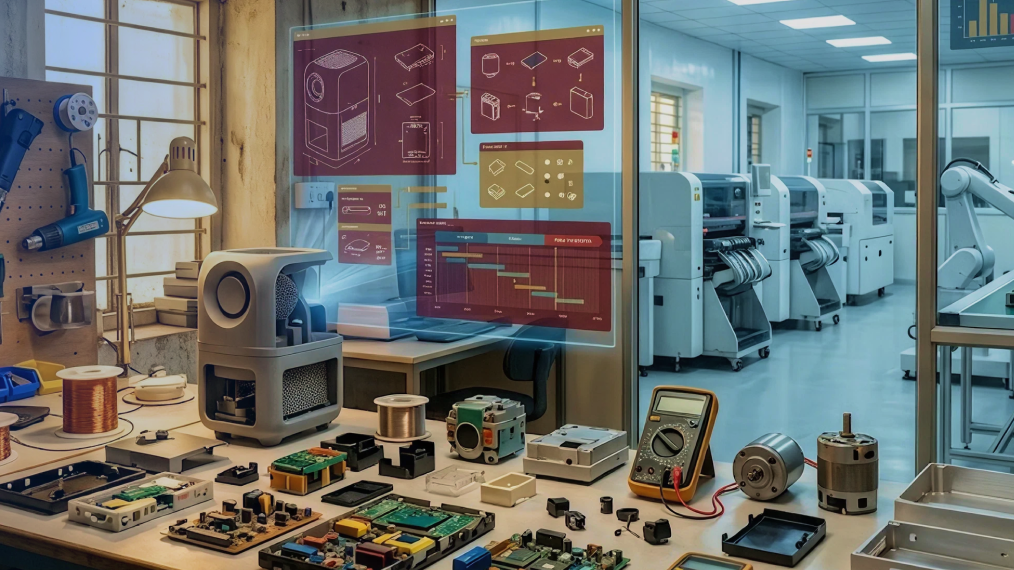
Creating successful consumer electronics products includes much more than designing a PCB and assembling components. Every stage affects the next.
A typical product journey includes:
- Hardware architecture and embedded systems design
- PCB layout and DFMA validation
- Component sourcing and BOM optimization
- PCB assembly and prototype testing
- Compliance certification
- Pilot production
- Volume manufacturing
Problems arise because these processes run separately rather than in coordination, and the gap between what engineering assumes about components and what procurement finds when sourcing them is where most delays are actually born.
For example, the design team chooses components without considering their availability in the future. Procurement finds out that these components have longer lead times and the whole process needs to be redone. Early collaboration between engineering and sourcing teams helps eliminate these avoidable setbacks.
Design Products with Manufacturing in Mind
Many hardware companies focus on product functionality first and manufacturing later. This approach often increases engineering revisions during production.
By employing Design for Manufacturing and Assembly (DFMA) in advance, issues can be identified before production takes place while designs are still flexible enough to fix them without a respin.
This process improves:
- Manufacturing yield
- Assembly efficiency
- Product reliability
- Production readiness
Instead of correcting problems after prototypes fail, engineering teams solve them while designs are still flexible.
Build Better Prototypes Faster
Prototype cycles are frequently the longest and most resource-intensive step in hardware development. Rapid prototyping shortens these cycles by swiftly testing designs before full production begins.
A faster prototype process includes:
- Quick PCB fabrication
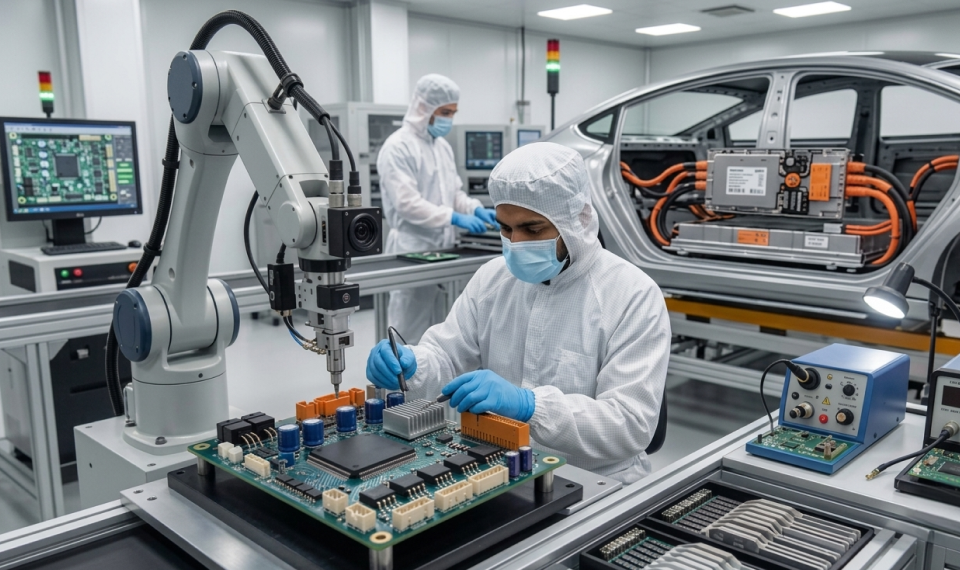
- Automated PCB assembly
- Functional testing
- Embedded firmware validation
- Mechanical enclosure verification
When the prototype feedback is quick, changes are made early, thus reducing revisions before production.
Strengthen Supply Chain Planning Early
Many product delays have little to do with engineering. Components frequently become unavailable after designs have already been finalized.
Strong supply chain planning starts during product design instead of after engineering completion.
Important planning activities include:
- BOM optimization to reduce sourcing risks
- Identifying approved alternate components
- Monitoring lifecycle and obsolescence status
- Evaluating supplier lead times
- Improving supply chain visibility across vendors
These practices reduce unexpected shortages and help maintain production schedules even when market conditions change.
Use Integrated Manufacturing Instead of Fragmented Vendors
Managing multiple independent vendors for PCB fabrication, assembly, sourcing, testing, and logistics consistently introduces coordination delays, not because vendors are incompetent, but because no single vendor owns the outcome.
The integrated approach through contract manufacturing, on the other hand, facilitates communication and improves accountability. Instead of coordinating multiple independent vendors, enterprises operate inside a single coordinated workflow that keeps engineering changes, procurement updates, manufacturing progress, and quality checks linked together.
This is especially helpful in consumer electronics manufacturing, since modest design changes can affect sourcing, production planning, and testing.
Real-Time Data Reduces Scheduling Risk
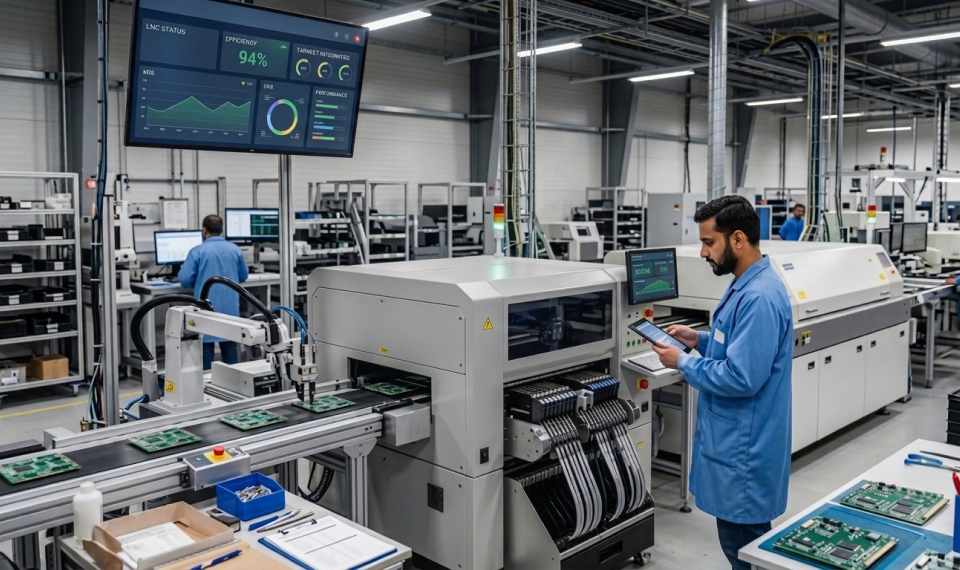
Modern consumer electronics product development depends on visibility. Instead of tracking project progress, production status, and sourcing concerns on spreadsheets and email chains, firms are increasingly turning to digital tools that provide real-time monitoring.
Important data includes:
- Live BOM analysis
- Component availability
- Manufacturing readiness reports
- PCB manufacturability feedback
- Production tracking
- Vendor performance
Access to this information allows project managers to identify issues before they become scheduled risks.
Balance Speed with Quality
Launching faster should never entail cutting corners on product quality.
Skipping engineering validation generally leads to greater difficulties after production starts. Product failures, warranty claims, and customer complaints are considerably more costly than fixing concerns during development.
Engineering verification, functional testing, environmental validation, quality inspections, and production monitoring are all parts of a balanced process throughout every manufacturing stage.
This enables enterprises to shorten development schedules without raising operational risk.
How Elecbits Accelerates Consumer Electronics Product Development
Building a hardware product is significantly more efficient when engineering, sourcing, manufacturing, and quality teams work through a single connected workflow rather than coordinating across separate vendors. Elecbits brings together hardware design, PCB fabrication, PCB assembly, component procurement, testing, and production under one roof, removing the coordination overhead that slows most consumer electronics programs down and giving teams a single point of accountability from prototype to mass production.
XOR, Elecbits’ AI-powered platform, provides real-time BOM intelligence, component availability tracking, manufacturability analysis, and production visibility, so engineering and procurement teams can make sourcing decisions before they become schedule risks, not after. By combining engineering expertise with connected manufacturing processes, Elecbits helps organizations reduce development delays, improve decision-making, and move from prototype to volume manufacturing with greater speed and confidence.
Conclusion
Getting to market faster in consumer electronics is not about compressing individual stages; it is about removing the gaps between them. Companies that combine DFMA, rapid prototyping, intelligent sourcing, and connected manufacturing workflows are better positioned to get products to market on time. As hardware gets more complicated, firms that increase collaboration and insight across the product lifecycle will have a stronger competitive advantage, while bringing innovative products to market faster.
Frequently Asked Questions
1What is time-to-market in consumer electronics?
The time to market is the entire period taken from idea to actual market launch. A shorter consumer electronics product development process can help organizations react more quickly to customer requirements and market changes.
2How can electronics companies reduce time-to-market?
DFMA, rapid prototyping, engineering integration, early supply chain involvement, automated testing, and improved collaboration between designers and manufacturers are some of the techniques firms use to speed up their product development process.
3How does rapid prototyping speed up product development?
Rapid prototyping helps validate hardware designs at an early stage, finds out any engineering problems early on, and allows for fewer design iterations as well, helping teams move into production with greater confidence and fewer delays.
4What role does an EMS partner play in reducing time-to-market?
Having an experienced consumer electronics manufacturing partner simplifies sourcing, PCB assembly, testing, manufacturing, and logistics, making it easier to coordinate and increasing the efficiency of the manufacturing process.
5How can supply chain planning improve product launch timelines?
Early supply chain planning helps to enhance component availability, decrease the risk of sourcing problems, assist with BOM optimization, find alternatives for components, and avoid production disruptions caused by a lack of components or long lead times.



 Resources Quality standards Reliable methods to keep our quality consistent. Blog Deep dive into market-moving trends.