Creating a hardware product seems simple enough until you actually move from idea to working product. This is when most people have trouble. They can make a great-looking design, but the initial prototype does not work, there are many delays, and the cost of everything increases rapidly.
This occurs because the transition from concept to physical product is messy. Components work differently in real environments, supply chains shift and even a small design flaw results in expensive revisions. That's why a structured approach to electronic circuit prototyping matters early in the journey.
This guide breaks down how to approach prototyping in a way that saves time, reduces risk, and prepares your product for manufacturing.
Understanding the Challenge in Hardware Development
Unlike software, hardware cannot be patched instantly. Once you manufacture a board, every mistake has a cost. A wrong resistor value or poor layout can mean redesigning the entire board.
Many teams often overlook the hardware design process; they go directly from ideation to PCB prototyping without verifying key assumptions. Prototyping helps you test early, fail fast, and refine before scaling.
What Is Electronic Hardware Prototyping?
Electronic hardware prototyping refers to the process of making early models of your device to check its performance and feasibility. During the initial phase of design, it is common to use breadboards or development kits. When the design progresses further, PCB prototyping becomes necessary to ensure that the performance matches expectations.
This step is critical for:
- Verifying circuit behavior
- Testing embedded systems' logic
- Validating power consumption
- Ensuring compatibility between electronic prototyping components
Skipping this essential growth stage usually results in expensive redesign cycles.
Key Steps in the Hardware Design Process
A well-structured hardware design process overcomes uncertainty and keeps your team aligned.
1. Concept and Requirements Definition
Begin by outlining product specifications. Identify what should be done by the device, the power source, and the operational environment for your device. For example, wearable technology must consider minimal power usage and a small size design.
2. Schematic Design
Schematic design is the process where your prototype begins to form. The engineers select the components and establish the logic for the system. It is crucial to select the right electronic prototyping components. Factors like availability and lifecycle become very important at this stage.
3. Prototype Development
Initial prototypes are developed using breadboards or development kits. This is part of rapid prototyping electronics, where speed is more important than perfection. Here you test basic functionality. Is the sensor working? Is the microcontroller stable?
4. PCB Design and Layout
Once validated, the process will move to PCB prototyping. A good PCB layout design is done considering signal integrity, thermal behavior, and manufacturability. Here, Design for Manufacture and Assembly (DFMA) analysis is included.
5. PCB Assembly and Testing
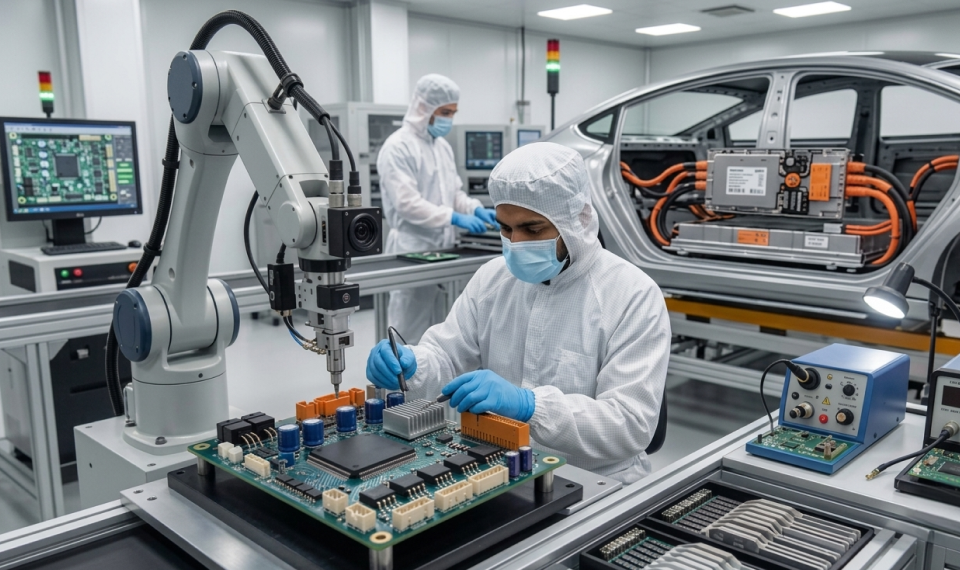
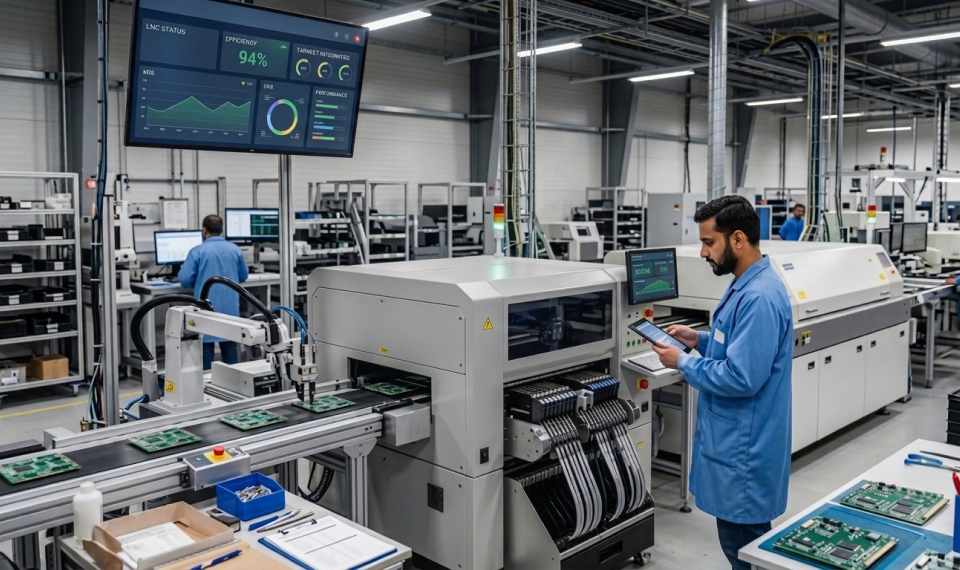
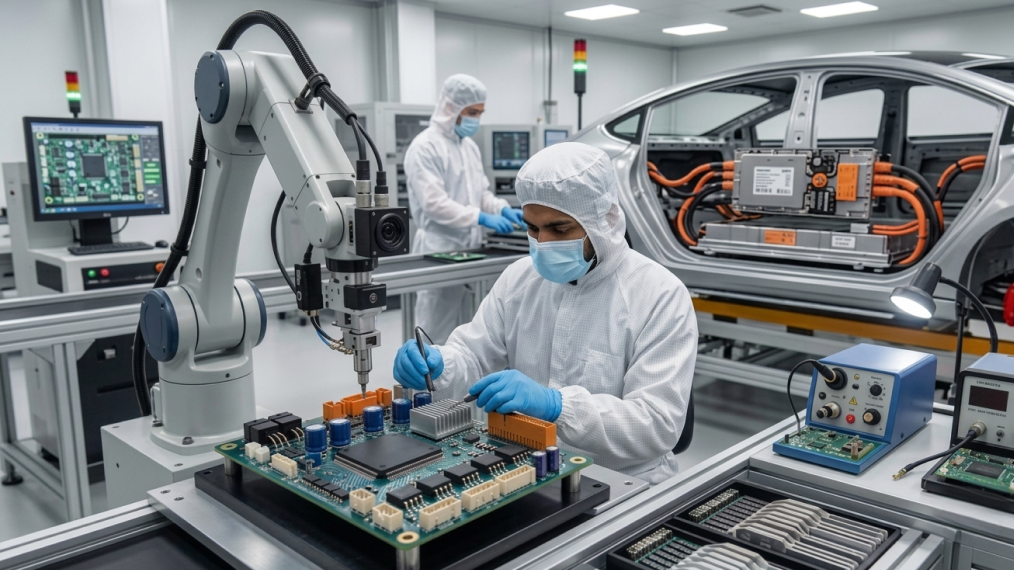
The board is assembled either by SMT or by through-hole processing. Testing consists of functional validation and debugging. Your prototype electronics should now behave close to what will be the final product.
6. Iteration and Refinement
Prototypes are never perfect the first time around. Having multiple iterations is normal. Each version is more reliable and performs better.
Tools You Need for Electronic Circuit Prototyping
You don't need a full scale laboratory or manufacturing units to get started, but some basic tools make a big difference.
Basic Tools
- Breadboards and jumper wires
- Multimeter for voltage and current measurement
- Oscilloscope for signal analysis
- Soldering station
These are enough for early-stage rapid prototyping electronics.
Design Tools
- CAD software for schematic and PCB layout
- Simulation tools to test circuits virtually
- BOM management tools for sourcing
These tools support a more structured hardware design process.
Advanced Tools
- Logic analyzers for debugging communication protocols
- Power analyzers for battery-powered devices
- Thermal cameras for heat management
As your prototype electronics evolve, these tools help identify deeper issues.
Best Practices to Follow for Hardware Prototyping
Start Simple: Don't over engineer your first prototype. Concentrate on core functionality. A simple version helps you find problems faster.
Validate Components Early: Component shortages can delay production. Always check availability while selecting electronic prototyping components.
Plan for Manufacturing: Design decisions should be made with scalability and assembly in mind. DFMA principles reduce production problems in the future.
Use Iterative Testing: Testing should happen at every stage. Don't wait until the final assembly. Early testing reduces rework.
Maintain BOM Discipline: A clean and optimized Bill of Materials (BOM) improves sourcing efficiency and cost control.
Don't Skip PCB Prototyping: Breadboards can be useful, but they don't reflect real-world conditions. PCB prototyping helps validate performance under actual operating conditions.
Elecbits: Simplifying Your Path from Prototype to Production
Prototyping, sourcing and manufacturing are all managed separately, causing friction. Teams often struggle with vendor coordination, BOM optimization, and production timelines.
Platforms like Elecbits make this easier by combining design, sourcing and manufacturing under one roof. It improves supply chain visibility and turnaround time for rapid prototyping electronics.
Rather than dealing with multiple vendors, teams can focus on optimizing their hardware design process and getting products to market faster.
Conclusion
When prototyping is done right, hardware development is predictable. Every iteration reduces the uncertainty and improves the product quality.
Structured electronic circuit prototyping takes you from concept to production with fewer surprises, whether you're developing IoT devices, consumer electronics or industrial systems.
Test early, refine often, clarity is key. That is how you make great hardware products.



 Resources Quality standards Reliable methods to keep our quality consistent. Blog Deep dive into market-moving trends.