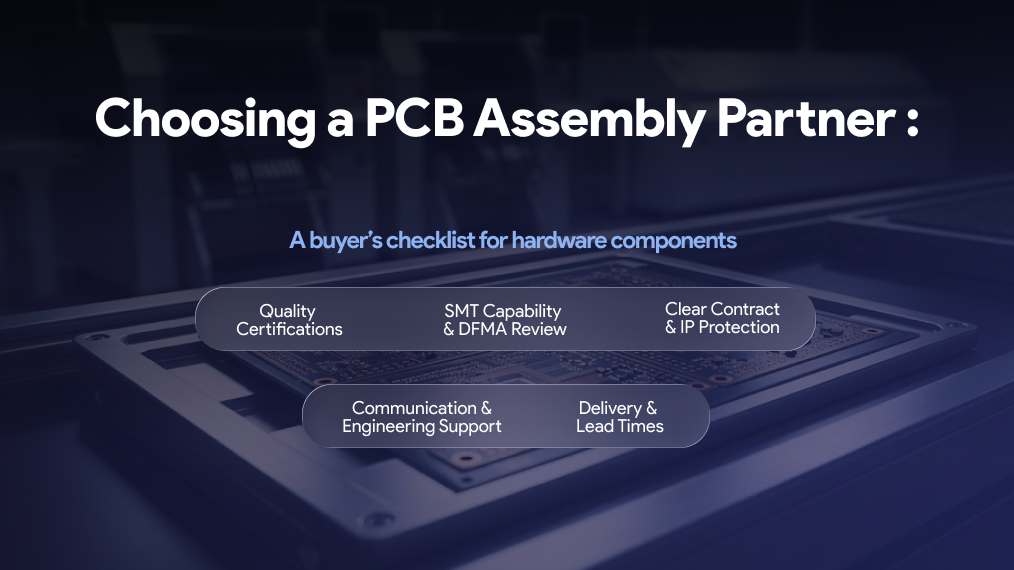
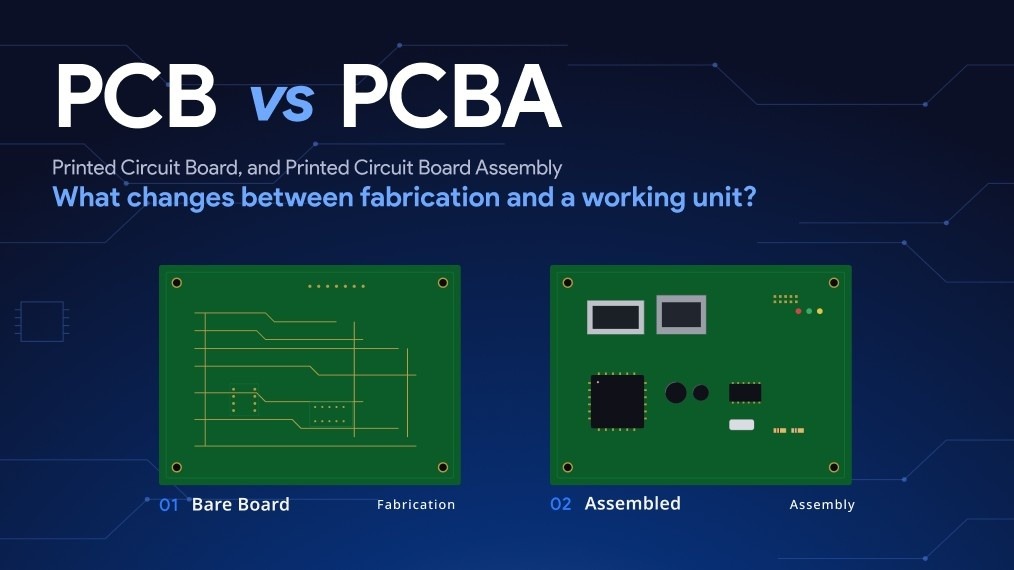
For many hardware manufacturers, developing a functional prototype seems to be the most challenging phase in product development. This means the idea works and the technology has been proven. However, this is the stage when a whole new set of problems emerges.
Although a prototype shows the functionality of a product, it does not ensure its efficient manufacturability. Parts and components that could easily be obtained during the development process suddenly turn into a problem in mass production. An assembly process that could be done effectively for a small number of products turns out to be too costly and complex in production. As a consequence, product releases are delayed, budgets blow up, and precious market windows get missed.
This gap between the creative ideas and their implementation remains the main difficulty of consumer electronics product development. Companies able to bridge this gap more effectively will be better placed to launch faster, manage expenses, and remain competitive.
Why Scaling Hardware Is More Complex Than Building It
Unlike software solutions, hardware is not scalable through mere upgrades. Every design choice will have implications on sourcing, manufacturing, testing, logistics, and durability of the product.
Take the example of a smart home device. The initial prototype may perform perfectly in testing. But once the product moves toward mass production, new questions arise.
Can the components be sourced consistently?
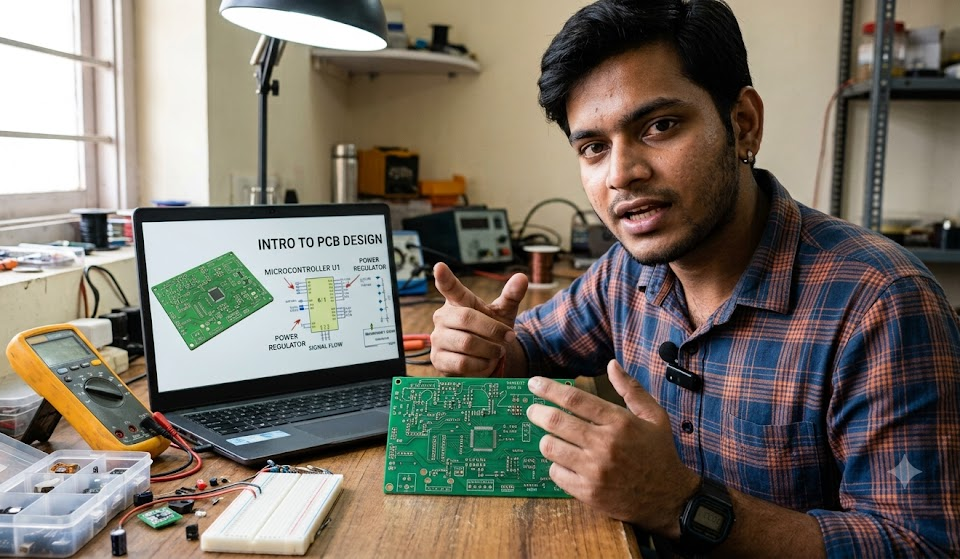
Is the PCB design optimized for assembly?
Will the testing process support thousands of units without slowing production?
These challenges highlight why businesses must think beyond functionality. A successful hardware product is not only designed to work; it is designed to be manufactured repeatedly and efficiently.
What Changes When a Product Moves Toward Production
As product development moves to manufacturing, the focus starts changing. While engineering performance is crucial, manufacturability plays an equally important role.
This is when product design for manufacturing becomes necessary. Rather than designing based on product functions alone, the emphasis shifts to understanding the implications of design choices for costs, material sourcing, assembly, and scalability.
Several factors must be considered early in the process:
- Component availability and lifecycle status
- PCB assembly requirements
- Production scalability
- Regulatory compliance
- Product testing and quality control
- Supply chain resilience
Addressing these factors early helps companies avoid expensive redesigns and production delays later.
The Engineering Decisions That Determine Manufacturing Success
Many production challenges can be traced back to decisions made during the design stage. Small improvements early in development can create significant benefits when production volumes increase.
1. Designing for Efficiency Instead of Just Functionality
Engineering teams naturally prioritize performance and user experience. However, a design that performs well in a prototype may create difficulties during manufacturing.
By adopting product design for manufacturing concepts at an earlier stage, companies can detect any possible bottlenecks and avoid costly mistakes. Selection of components, PCB design, thermal management, and enclosure design can be made keeping production considerations in mind.
For example, selecting widely available components instead of highly specialized alternatives can reduce procurement risks while improving supply chain flexibility.
2. Simplifying Assembly and Improving Reliability
When products become more sophisticated, assembly can get increasingly complex. More parts mean more steps in the assembly process and hence more potential for mistakes and inefficiency.
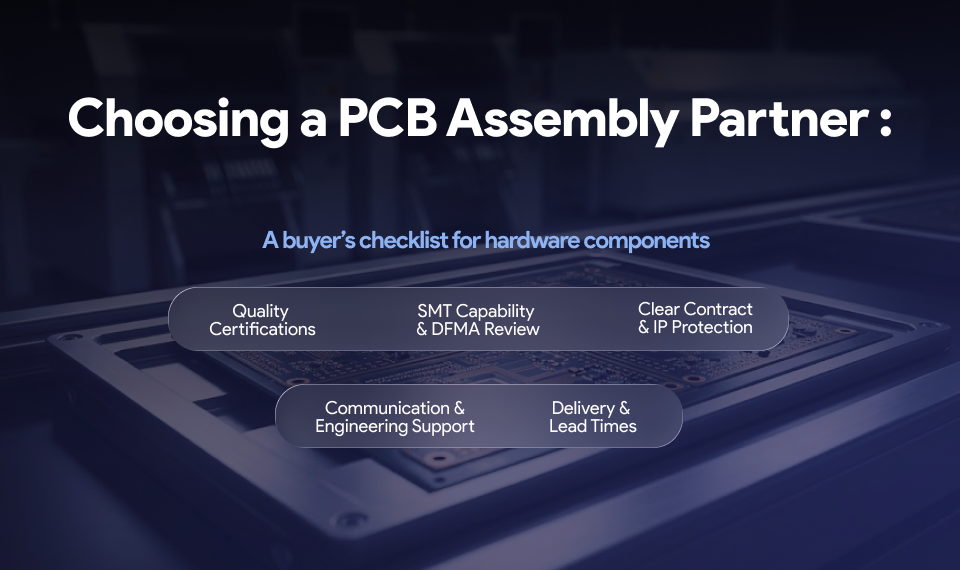
Here comes in design for manufacturing and assembly (DFMA). This aims to simplify the manufacturing process without sacrificing product functionality.
Some common improvements include:
- Reducing unnecessary part count
- Standardizing components across product lines
- Designing for automated assembly
- Improving accessibility for testing and inspection
These changes may seem minor during development, but they can significantly improve production efficiency and product quality at scale.
Strategies That Help Teams Accelerate Development Timelines
Reducing time-to-market requires more than faster engineering. Companies must also improve validation, sourcing, and manufacturing readiness.
1. Validate Designs Earlier Through Rapid Iteration
One of the most efficient ways to lower risks related to development is rapid prototyping and testing. There are professional electronics prototyping services that help test the performance of hardware, embedded systems, and mechanics. The earlier the validation is conducted, the easier it is to avoid mistakes and make corrections.
2. Optimize the Bill of Materials
BOM optimization is essential to controlling production costs and minimizing supply chain risk. Team members should analyze component lead times, supplier availability, component life cycle, and alternate sources. An optimized BOM contributes to increasing profitability and production stability.
3. Strengthen Supply Chain Visibility
The disruptions in the supply chain continue to affect electronics firms all over the world. Firms with supplier relationships and well-established procurement procedures are better prepared for shortages in a changing market environment. Higher visibility throughout the whole supply chain process is going to reduce the risk of any delays.
Turning Manufacturing Challenges Into Competitive Advantages
Many organizations work with specialized design for manufacturing services providers to improve production readiness. These specialists provide the link between engineering and production, evaluating products from a manufacturing point of view.
Their support frequently consists of PCB optimization, sourcing guidance, testing plan formulation, manufacturing risk assessment, and process improvement recommendations.
The benefits can be substantial:
- Faster production ramp-up
- Lower manufacturing costs
- Improved product quality
- Reduced redesign cycles
- Higher production yields
Likewise, professional DFMA services help companies recognize areas where they can simplify assembly, increase reliability, and manufacture efficiently before production begins. This helps minimize risks while improving the scalability of products.
How Elecbits Supports Businesses Throughout the Development Journey
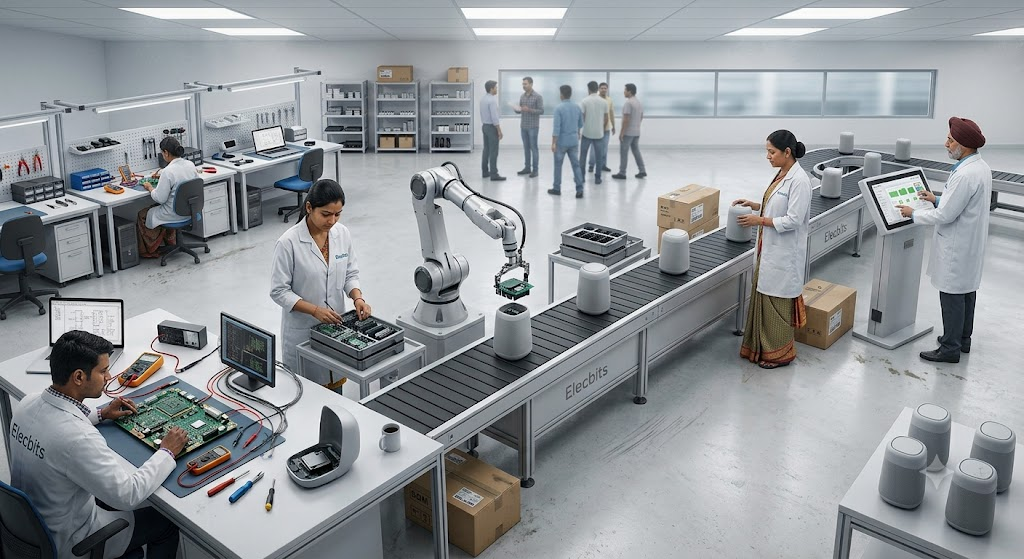
Getting a product from idea to manufacturing takes expertise in engineering, testing, sourcing, and manufacturing. Handling several vendors for each phase might generate communication problems and delays.
Elecbits helps to streamline this process with one-stop support for electronics product development. Our expertise includes hardware design, PCB development, embedded systems engineering, firmware development, testing, and manufacturing readiness.
By combining engineering expertise with manufacturing knowledge, Elecbits enables businesses to move from prototype to production more efficiently. This is why global brands like Maruti Suzuki, Siemens, Mothersone, and Ola Electric trust us for their electronic manufacturing and assembly procedures.
Summary
With the growing competition in consumer electronics manufacturing, companies have to focus on more than just innovation. Products must be designed for manufacturing, sourcing, quality, and scalability from the outset.
Companies that adopt product design for manufacturing and invest in strategic DFMA services will be better equipped to minimize development risks and speed up product releases. The companies that win in today's market aren't just the ones with the best ideas - they're the ones who can efficiently execute those ideas into product lines at scale.



 Resources Quality standards Reliable methods to keep our quality consistent. Blog Deep dive into market-moving trends.