Most hardware companies spend months obsessing over product features, industrial design, and user experience. Fair enough. That's the exciting part. But the moment a product moves toward manufacturing, the conversation changes fast.
Suddenly, the questions are less about innovation and more about consistency. Can production scale without quality dropping? Will components arrive on time? What happens if one tiny IC disappears from the market halfway through production? Hardware teams usually don't think much about these things until they're already dealing with delays and awkward customer calls.
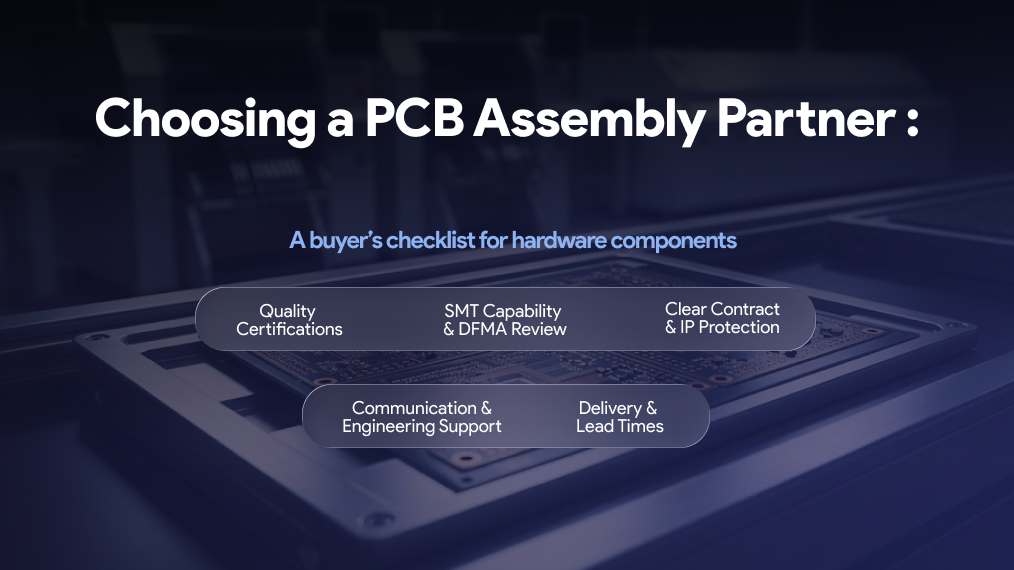
That's why choosing the right provider for PCB assembly services matters more than most companies expect. A manufacturing partner is not just assembling boards. They're shaping timelines, product reliability, and sometimes the reputation of the product itself.
Manufacturing Is Never "Just Assembly"
A lot of companies still compare vendors mainly on price. Maybe lead time too. It feels logical in the beginning. But electronics manufacturing is messy behind the scenes, and cheaper vendors often look great right until production problems start showing up.
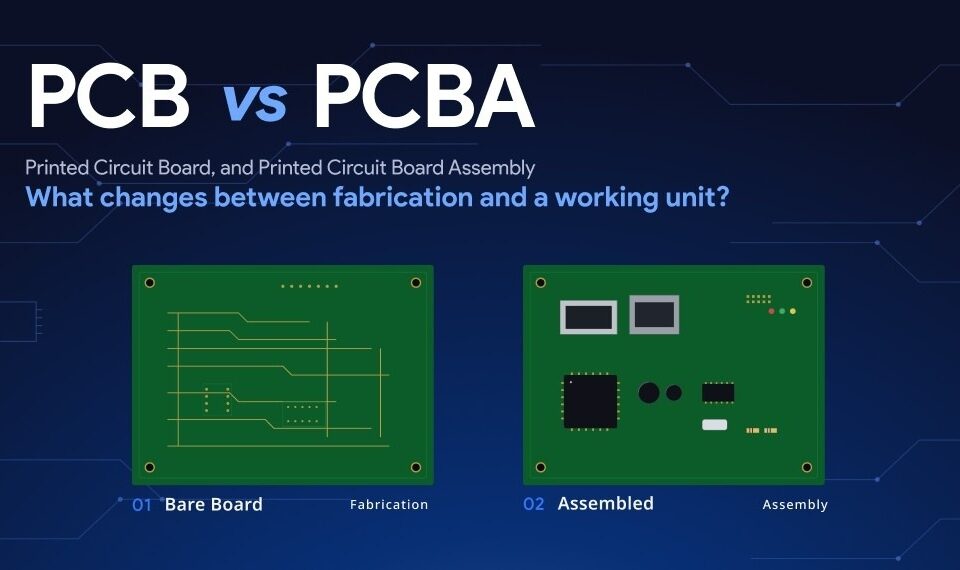
Modern hardware products include embedded systems, firmware coordination, thermal management, sourcing issues, compliance requirements and a long list of operational dependencies. A good PCB assembly partner understands those layers, rather than approaching manufacturing as a simple pick-and-place operation.
Take BOM sourcing as an example. One unavailable component can freeze production for weeks. Sometimes months. And the frustrating part? It's often a tiny part nobody paid attention to during prototyping.
An experienced manufacturer usually catches those risks early. They'll suggest alternates, flag lifecycle concerns, or recommend small design changes before production becomes expensive to fix. That kind of support saves more money than chasing the absolute lowest quote ever will.
Engineering Support Matters More Than Most Buyers Realize
Here's something many non-hardware founders learn late: manufacturing problems often begin during design, not production.
A capable PCB assembly manufacturer reviews Gerber files, BOM structure, component spacing, and manufacturability before assembly starts. This is where DFMA reviews become useful. Not glamorous, but incredibly practical.
Good DFMA analysis helps identify:
- Thermal risks
- Tight component spacing
- Soldering challenges
- Sourcing concerns
- Production inefficiencies
Sometimes a board works perfectly in prototypes but becomes difficult to manufacture consistently at scale. That happens more often than people think, especially with compact electronics products.
A good manufacturing team will point that out early instead of waiting for defects to appear later on the assembly line.
Supply Chain Visibility Is a Big Deal Now
A few years ago, supply chain conversations mostly stayed in procurement meetings. Now they're everywhere.
A dependable contract PCB assembly provider should offer visibility into sourcing timelines, alternatives, and inventory risks. Otherwise, businesses end up reacting to shortages instead of planning around them.
The semiconductor shortage period exposed this brutally. Companies had products ready for production but couldn't ship because one controller suddenly had a 40-week lead time. Some teams had to redesign entire boards just to keep projects alive.
Good electronic PCB assembly providers actively monitor those risks instead of simply waiting for parts to disappear from the market.
Before selecting a supplier, companies should ask simple but important questions:
- Can they source globally approved components?
- Do they manage counterfeit prevention?
- Can they recommend alternates quickly?
- Do they provide sourcing visibility?
Those answers tell you a lot about how prepared a manufacturer actually is.
Testing Should Never Be an Afterthought
A board powering on successfully does not automatically mean the product is reliable. That assumption causes plenty of painful field failures later.
Depending on the product category, a good PCB assembly partner should support testing processes such as AOI, functional testing, ICT, X-ray inspection, and burn-in testing.
For enterprise or industrial products, testing consistency is enormous. One recurring defect in the field can quietly destroy customer trust over time.
And once products are deployed at scale, fixing hardware problems becomes painfully expensive. Usually, it is much more expensive than proper testing upfront.
Why PCB Assembly Services India Are Getting Attention
There's been a noticeable shift in global manufacturing conversations lately. Companies are trying to reduce dependency on single-region supply chains after seeing how fragile things can get during disruptions.
That's one reason demand for PCB assembly services India has grown steadily across industries like EV, IoT, healthcare electronics, and industrial automation.
The interesting part is that many Indian manufacturing companies are no longer competing only on labor cost. They're offering engineering collaboration, too. That changes the equation quite a bit.
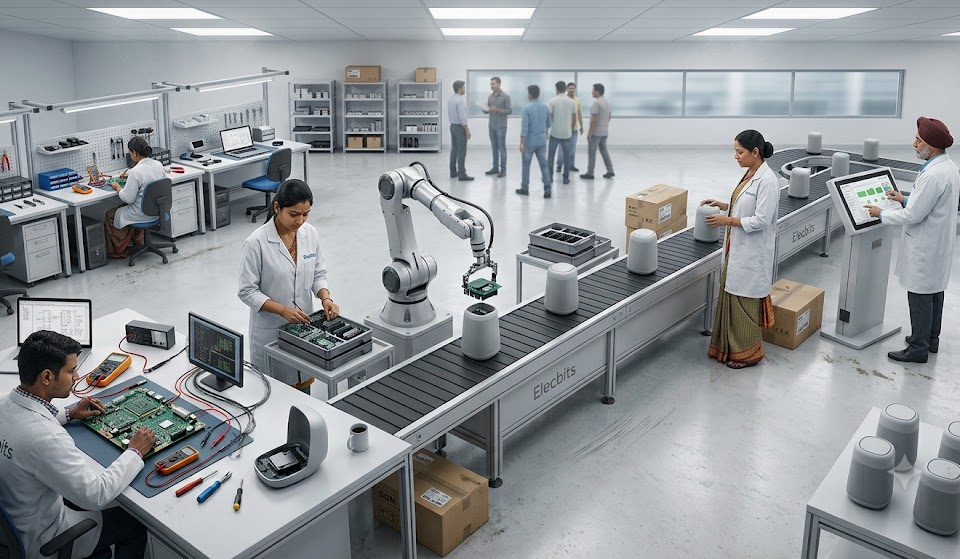
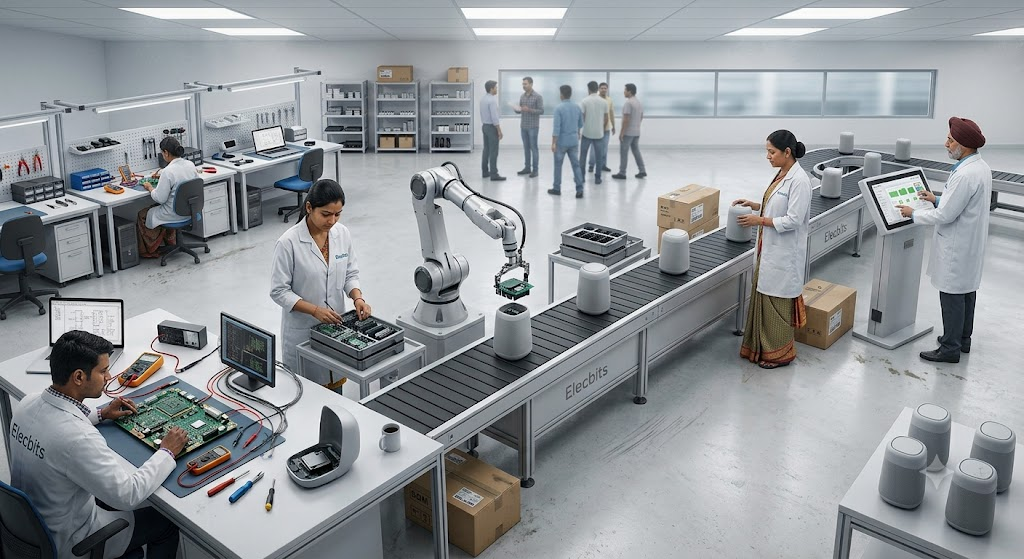
Providers like Elecbits, offering PCB assembly services, combine sourcing, prototyping, testing, and production support under one workflow. For hardware companies, that coordination matters. Managing five different vendors for one product gets exhausting surprisingly fast.
Communication gaps also cause more delays than people expect. One sourcing issue missed between teams can quietly derail an entire production schedule.
Elecbits: Helping Hardware Companies Build More Reliable PCB Assembly Workflows
Elecbits helps hardware companies to simplify electronics development by integrating PCB design, embedded engineering, sourcing, prototyping, testing and manufacturing coordination into a connected workflow. Instead of having teams work with separate vendors at each stage, we are building a more efficient pipeline from concept to production.
We also created Elecbits XOR, our AI-powered BOM and supply chain visibility platform to make sourcing and supply chain planning easier. Teams quickly identify component pricing, lead time risks, alternate parts and lifecycle concerns before they become production delays.
This integrated approach benefits brands like Motherson, Maruti Suzuki, Siemens, and Ola Electric by improving communication, reducing sourcing uncertainty, and helping products move from prototype to scalable manufacturing with fewer operational bottlenecks.
Conclusion
Choosing a PCB assembly manufacturer is not really a matter of finding someone who can cheaply assemble boards. There are many vendors that can do that.
The real value is in finding a team that understands engineering realities, sourcing risk, manufacturing scalability and production consistency together.
The best PCB assembly services India providers are emerging as long-term operation partners rather than just assembly vendors. And that change is more important than ever as electronic products get more complex.



 Resources Quality standards Reliable methods to keep our quality consistent. Blog Deep dive into market-moving trends.